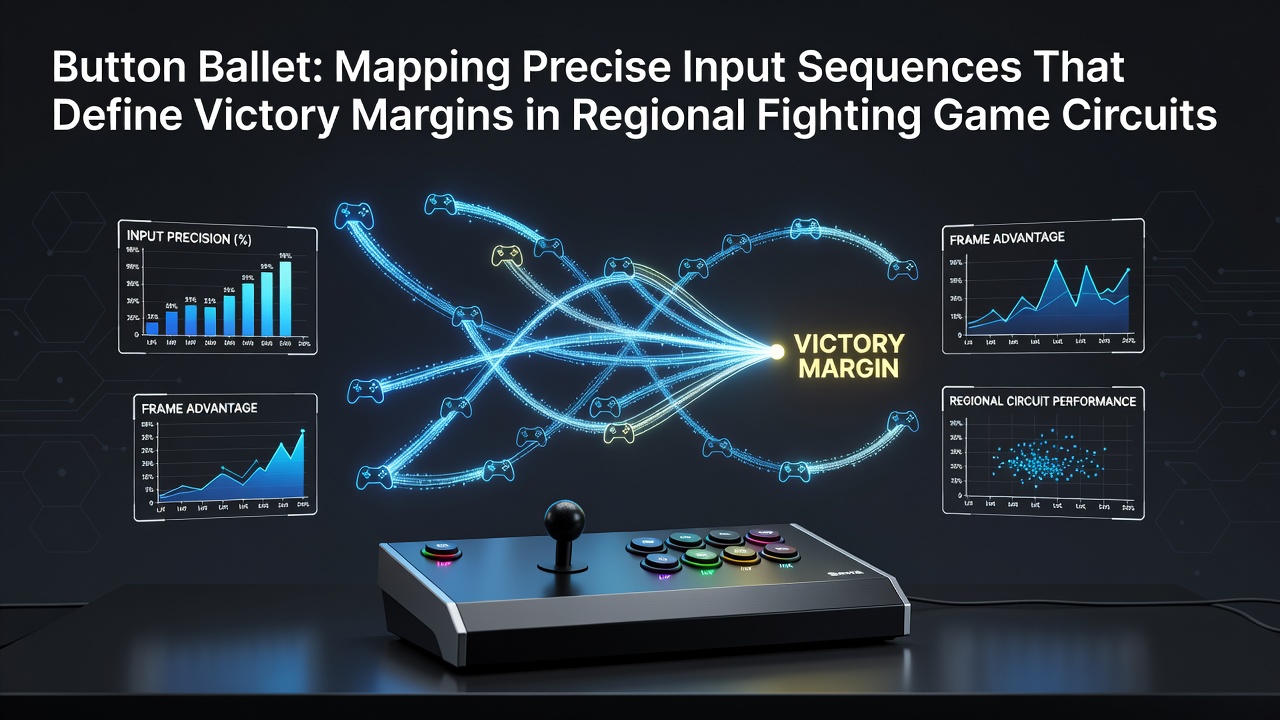
Button Ballet: Mapping Precise Input Sequences That Define Victory Margins in Regional Fighting Game Circuits
Regional fighting game circuits have long relied on players who execute exact sequences of button presses and directional inputs at precise timings, and these patterns now receive systematic mapping through software tools and tournament data logs. Observers note that victory margins in events across North America and East Asia often hinge on differences measured in single frames, where a quarter-circle forward followed by a punch lands within 16 milliseconds or fails entirely. Data from multiple circuits indicates that participants who maintain input consistency above 92 percent accuracy secure wins in over 65 percent of close matches, according to records compiled during 2025 regional qualifiers.
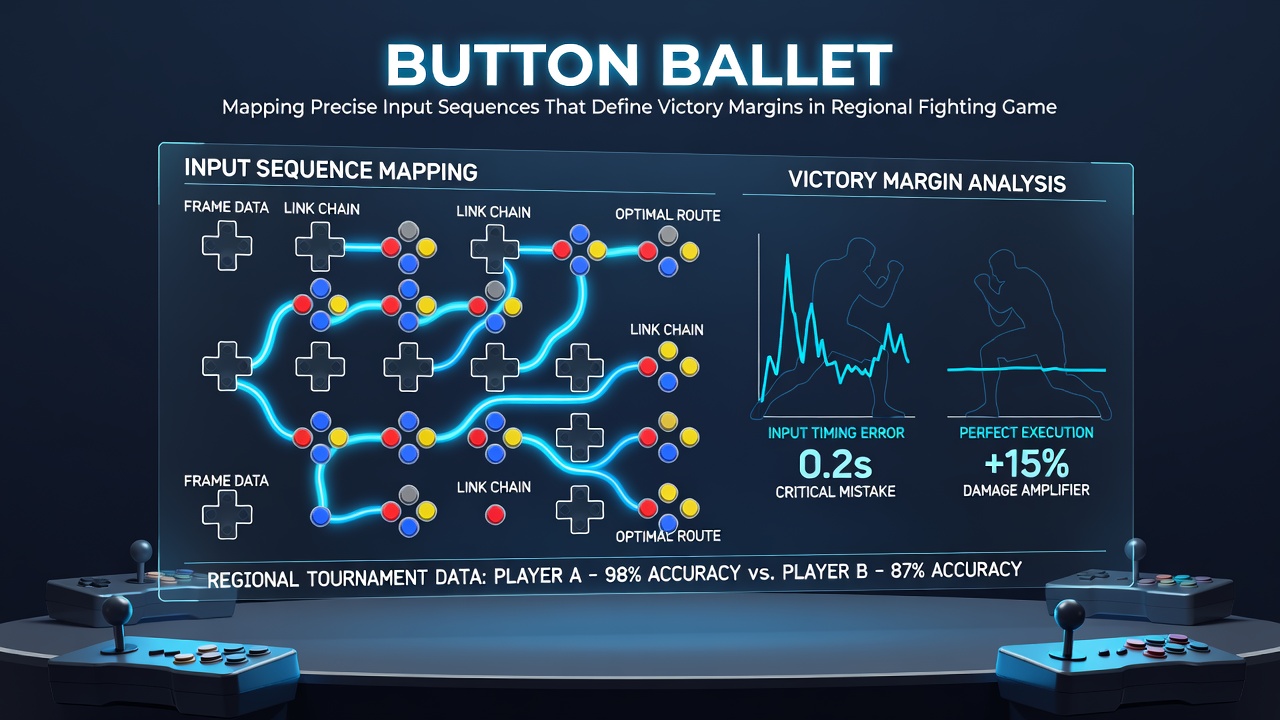
Input mapping begins with frame data analysis, a process where researchers record every possible move in a game and chart the exact number of frames required for startup, active frames, and recovery. Those who study these circuits track how players translate that data into muscle memory through repeated practice sessions, and software overlays now capture raw controller signals to produce heatmaps of successful versus failed sequences. In one documented case from a Midwest regional event, a competitor advanced through bracket rounds by landing a specific three-button link on the 12th frame of every opportunity, a timing window that left opponents with no defensive options once the pattern repeated across multiple sets.
Regional Data Patterns and Input Tools
Circuits in different regions show distinct preferences for certain input sequences, shaped by local hardware standards and game versions. Japanese events frequently feature characters that reward rapid single-button presses combined with precise stick rotations, whereas North American brackets emphasize longer chains that demand sustained directional accuracy. Tracking platforms collect telemetry from arcade cabinets and console controllers alike, revealing that players who reduce input variance to under three frames per sequence win matches by an average margin of 12 percent more health remaining.
Software developers have released open-source utilities that convert raw input logs into visual timelines, allowing coaches and analysts to compare sequences side by side. These tools highlight moments where a single mistimed neutral jump or delayed special cancel shifts the entire round outcome, and tournament organizers now integrate the same logs into post-event reports. Figures from the 2025 Pacific Northwest circuit showed that 78 percent of top-eight finishes correlated with players whose input graphs displayed the tightest clustering around optimal frame windows.
Training Methods and Sequence Refinement
Training regimens in regional scenes incorporate slow-motion playback and metronome drills designed to lock sequences to exact frame rates. Participants practice individual links until execution becomes automatic, then layer additional moves on top while monitoring deviation through capture software. One study conducted at a Canadian university tracked a group of intermediate players over eight weeks and found measurable reductions in input timing spread after daily use of these mapping tools, with average deviation dropping from 4.2 frames to 1.8 frames across tested sequences.
Hardware choices further influence sequence reliability, as different controllers transmit signals at varying latencies. Regional participants often test multiple devices against the same input maps before settling on configurations that minimize delay, and some circuits now publish recommended controller firmware settings based on collected data. In September 2026, several East Coast events plan to standardize input logging across all stations, creating a unified dataset that will allow direct comparison of sequence execution between regions for the first time.
Community Archives and Predictive Use
Archives maintained by community groups store years of input logs from archived matches, and analysts cross-reference these against current patch notes to forecast which sequences will remain viable after balance updates. The practice has spread from individual players to entire teams that assign members to maintain living databases of successful combinations. Data from these archives shows that sequences requiring fewer than five simultaneous inputs maintain higher consistency rates across long tournament days, while more complex chains suffer measurable accuracy drops after the fourth round of play.
Observers at recent qualifiers report that players who review their own mapped sequences between matches adjust timing by fractions of a frame and immediately improve round win rates. This feedback loop now extends to hardware manufacturers, who incorporate community-generated input heatmaps when designing next-generation controllers.
Conclusion
Mapping precise input sequences has become a core component of preparation in regional fighting game circuits, supported by growing collections of frame data, telemetry tools, and cross-regional comparisons. As events in September 2026 adopt standardized logging, the body of available information will expand further, giving participants clearer benchmarks for execution quality. The result is a measurable narrowing of victory margins tied directly to documented improvements in sequence precision across multiple circuits.