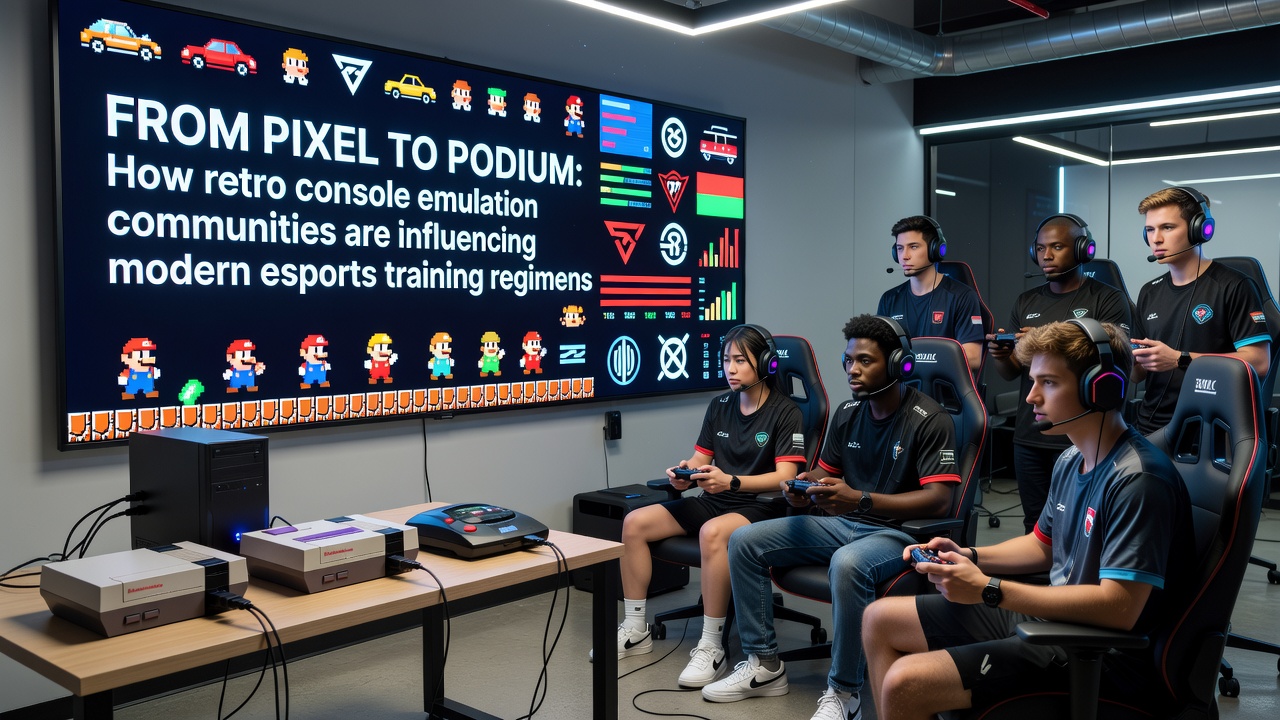
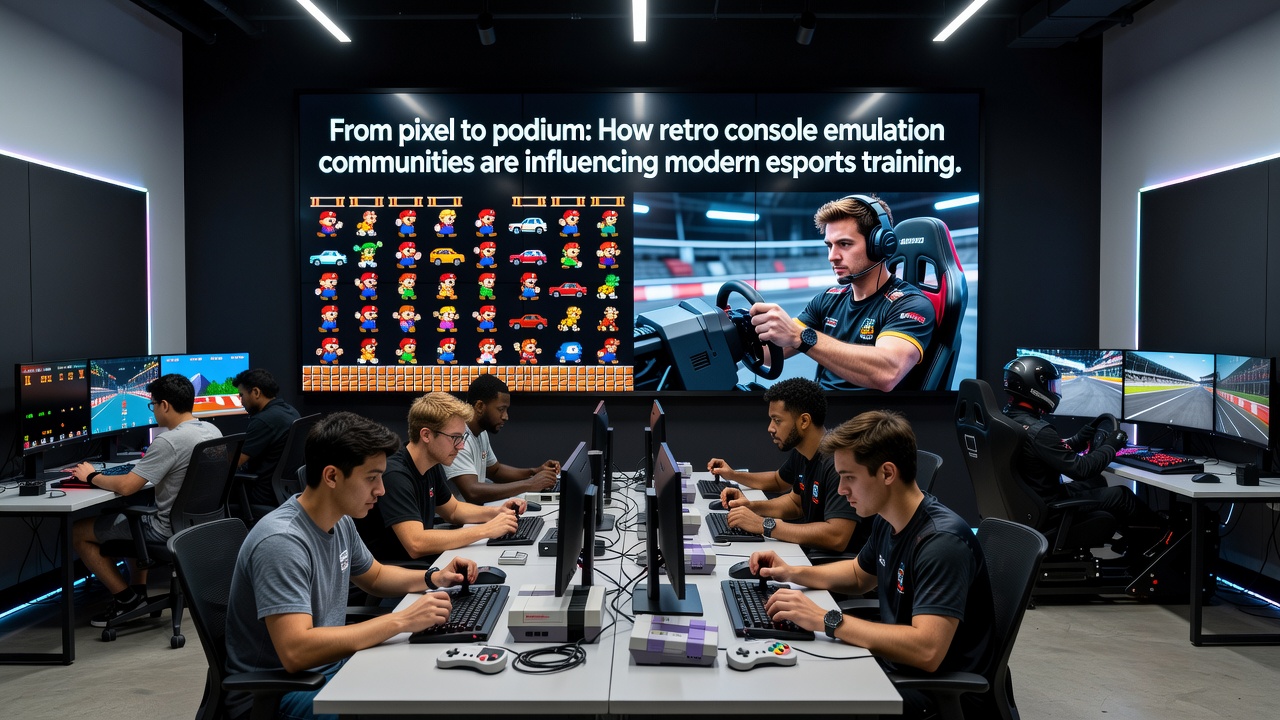
From pixel to podium: How retro console emulation communities are influencing modern esports training regimens
Retro console emulation communities have developed detailed tools and methods over decades, and these resources now feed directly into esports training programs across multiple disciplines. Observers note that emulation software such as RetroArch and Mesen allows precise frame-by-frame analysis, while savestate functions and input recording features create repeatable drills that mirror competitive scenarios. Research indicates that players who incorporate these techniques often refine timing windows and reaction thresholds before transitioning to contemporary titles.
Core tools emerging from emulation circles
Emulation forums and repositories maintain extensive libraries of modified ROMs designed for isolated practice, and these modifications isolate specific mechanics without the variables present in full matches. Data from community archives shows that input polling adjustments and lag compensation scripts, originally built for accurate reproduction of 1980s and 1990s hardware, translate into training modules for fighting games and first-person shooters. Those who've studied these transfers report that latency measurements taken on emulated systems provide benchmarks now used in professional coaching environments.
Community members frequently publish input display overlays and hitbox visualizations that originated in speedrunning and TAS (tool-assisted speedrun) projects, and esports teams have adopted similar overlays to review execution errors during scrimmages. Figures from 2025 indicate that several regional leagues began requiring frame data logs generated through emulation-derived software when submitting training reports. This standardization emerged after multiple organizations compared results across different console platforms and found consistent advantages in precision when emulators handled the baseline testing.
Training regimen adaptations documented in 2026
By October 2026, multiple esports academies in East Asia and Europe had integrated retro emulation modules into onboarding curricula for new roster members. These modules focus on micro-timing exercises derived from platformers and shoot-em-ups, where frame-perfect jumps and dodges translate into improved movement tech in battle royales and arena fighters. According to records maintained by the International Esports Federation, workshops held in Seoul and Berlin that month demonstrated direct performance gains when participants practiced on emulated hardware before switching to live tournament clients.
Analysts at several universities have tracked how savestate rollback systems, long standard in emulation communities, now appear in custom training tools for fighting game circuits. A report issued by the University of Melbourne's digital media lab detailed experiments where rollback netcode prototypes built on emulation frameworks reduced perceived input delay during cross-region matches. Players who trained with these prototypes showed measurable improvements in blockstring execution and punish windows when measured against control groups using conventional methods.
Hardware and software crossover patterns
Retro emulation communities also maintain extensive databases of controller response curves and button debounce timings, and professional hardware manufacturers have referenced these datasets when calibrating new fight sticks and gamepads. Trade data compiled by the Entertainment Software Association reveals that several 2026 controller models incorporated polling rate optimizations first tested in emulation environments. Teams that adopted these controllers reported faster adaptation periods during device transitions between platforms.
Community-driven projects such as custom shader pipelines and scanline filters, created to replicate original display characteristics, have found secondary use in reducing eye strain during extended practice sessions. Observers note that some organizations now pair these visual adjustments with performance tracking software, creating consistent training conditions across different monitor types and venue setups. This approach draws directly from emulation accuracy standards developed over the previous twenty years.
Conclusion
Emulation communities continue to supply verifiable data on input precision, timing mechanics, and hardware behavior that esports programs integrate into structured regimens. Documentation from 2026 shows steady adoption of these resources across regions, with measurable effects on execution consistency and training efficiency. As emulation techniques evolve alongside new titles, the exchange between these domains remains an active channel for technical refinement in competitive gaming.