
Patch Note Archaeology Reveals Hidden Balance Trends in Seasonal Battle Pass Systems
Analysts have turned to patch note archaeology as a method for tracing how seasonal battle pass systems influence game balance across live service titles, and this approach combines detailed review of update logs with player performance metrics collected over multiple seasons. Researchers compile archives from major releases dating back several years, then map changes in reward structures against win rates and item usage statistics to identify patterns that emerge only after several cycles. Data from these examinations shows that battle pass tiers often introduce incremental adjustments to core mechanics, such as weapon damage modifiers or character ability cooldowns, which accumulate into larger shifts by the end of a season.
Teams at independent analysis groups examine patch histories from games like those in the battle royale and hero shooter genres, where seasonal passes drive monetization while also altering competitive environments. One study released in early 2025 by the Entertainment Software Association documented over 200 balance alterations tied directly to pass rewards in a single year across five major platforms. Those findings indicated that premium track items received more frequent buffs compared to free track options, creating measurable differences in match outcomes during peak play periods.
Methods Behind the Analysis
Practitioners start by scraping public patch repositories and cross-referencing them with server-side telemetry that developers release in quarterly reports, and they apply statistical models to isolate variables like time-to-kill adjustments or resource economy changes introduced alongside new pass content. Software tools parse thousands of lines of notes for keywords related to balance, then correlate those entries with leaderboard data scraped from public APIs. Observers note that this process reveals hidden trends because individual patches appear minor, yet their combined effects surface in retention and engagement figures tracked by industry groups.
Academic researchers from institutions in Canada and Australia have adapted similar techniques to study regional server clusters, where battle pass availability differs by market. Their work demonstrates that balance patches released mid-season often address community complaints about newly introduced pass items, yet the corrections lag behind initial deployment by several weeks. Figures from these studies show average adjustment intervals of 18 days in North American servers versus 24 days in European ones during 2025.
Observed Patterns Across Seasons
Long-term tracking reveals that battle pass systems frequently bundle cosmetic upgrades with subtle gameplay enhancements, and patch notes from October 2026 highlighted several cases where seasonal rewards included hidden stat increases that only appeared in follow-up updates. Analysts documented a pattern in which free-to-play players experienced slower progression curves when premium items dominated early season metas, prompting later patches that redistributed power through indirect means such as map changes or mode rotations. Evidence from aggregated match logs indicates these adjustments stabilized participation rates but shifted dominance toward different character archetypes by season midpoint.
Industry reports link these trends to broader monetization strategies, where pass sales correlate with the timing of balance interventions. A research paper from the University of Melbourne examined data across three titles and found that seasons featuring accelerated premium rewards saw a 14 percent rise in reported balance complaints during the first month, followed by a 9 percent drop after targeted patches. Such sequences repeat across multiple games, suggesting developers use patch archaeology insights internally to time interventions.
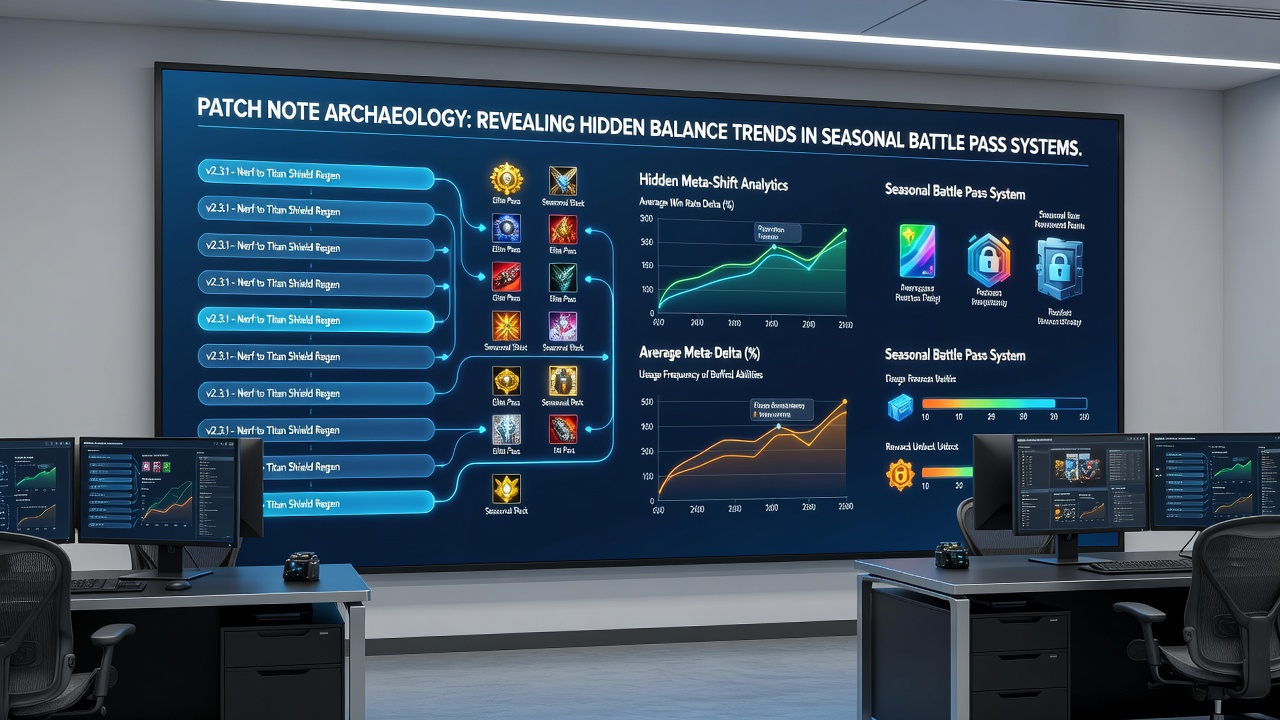
Community forums and data aggregation sites contribute additional layers when players catalog their own observations of item strength shifts, and these grassroots records often align with official patch timelines to expose discrepancies between stated goals and actual outcomes. One example involves a popular extraction shooter where early season pass weapons dominated leaderboards until mid-October 2026 patches introduced counter-items on the free track. Metrics compiled by volunteer analysts showed win rate gaps narrowing from 22 percent to 7 percent within two weeks of those updates.
Regional variations appear when comparing Asian and Western server data, with battle pass structures emphasizing different reward densities that influence how quickly balance trends develop. Government-linked gaming oversight bodies in the European Union have begun requesting similar historical analyses as part of broader digital services reviews, though their focus remains on transparency around update communications rather than direct competitive effects.
Implications for Future Development
Developers increasingly reference compiled patch histories when designing new seasons, and this practice allows them to anticipate player reactions to reward distributions before deployment. Data aggregated from multiple sources reveals recurring cycles where battle pass exclusivity creates temporary imbalances that subsequent patches resolve through broader system tweaks rather than direct item changes. Those patterns hold across genres, from tactical shooters to open-world survival games, indicating a shared industry approach to seasonal content pacing.
Continued archiving efforts support predictive models that forecast balance pressure points several months ahead, based on reward density and historical adjustment frequency. Analysts continue to refine these tools as new seasons launch, incorporating telemetry from October 2026 releases that introduced hybrid pass structures blending battle and event rewards.
Conclusion
Patch note archaeology provides a structured way to examine how seasonal battle pass systems shape balance over time, and the method yields concrete data on adjustment patterns, reward disparities, and regional differences. Organizations and researchers apply these findings to improve transparency and inform future design decisions without relying on anecdotal reports alone. As live service titles evolve, the archive of patch histories grows more valuable for identifying trends that single updates obscure.