Soundwave Strategies: Tracing How Adaptive Scores Reshape Ambush Tactics Across Stealth Game Servers
Adaptive audio systems in multiplayer stealth environments have shifted how players coordinate ambushes on dedicated servers, and data from industry reports tracks these changes across platforms. Researchers at institutions in North America and Europe have documented how dynamic scores respond to player positions, enemy patrol patterns, and server latency to alter timing windows for coordinated strikes. In September 2026, updates to several live-service titles introduced refined algorithms that adjust musical tension layers based on real-time cluster performance metrics, which in turn influenced server-side ambush success rates tracked by community analytics tools.
Core Mechanics of Adaptive Scoring in Stealth Servers
Adaptive scores pull from layered audio stems that game engines trigger through conditional parameters, and these parameters include proximity alerts, line-of-sight checks, and collective player movement vectors. Developers integrate middleware such as FMOD or Wwise to handle these triggers, allowing the soundtrack to escalate or recede without disrupting server synchronization. Observers note that when scores intensify during high-risk approach phases, players often adjust their positioning to exploit the audio cue as an implicit timer, while quieter passages encourage longer holds in cover before initiating contact.
Studies from Canadian research groups have measured reaction time variations tied to these audio shifts, revealing that teams using voice comms synchronized their entries more precisely when the score provided consistent rhythmic anchors. Meanwhile, servers hosted in EU regions reported different patterns, with players adapting to variable latency by treating score swells as secondary signals that compensated for delayed visual updates.
Impact on Ambush Coordination Across Regional Clusters
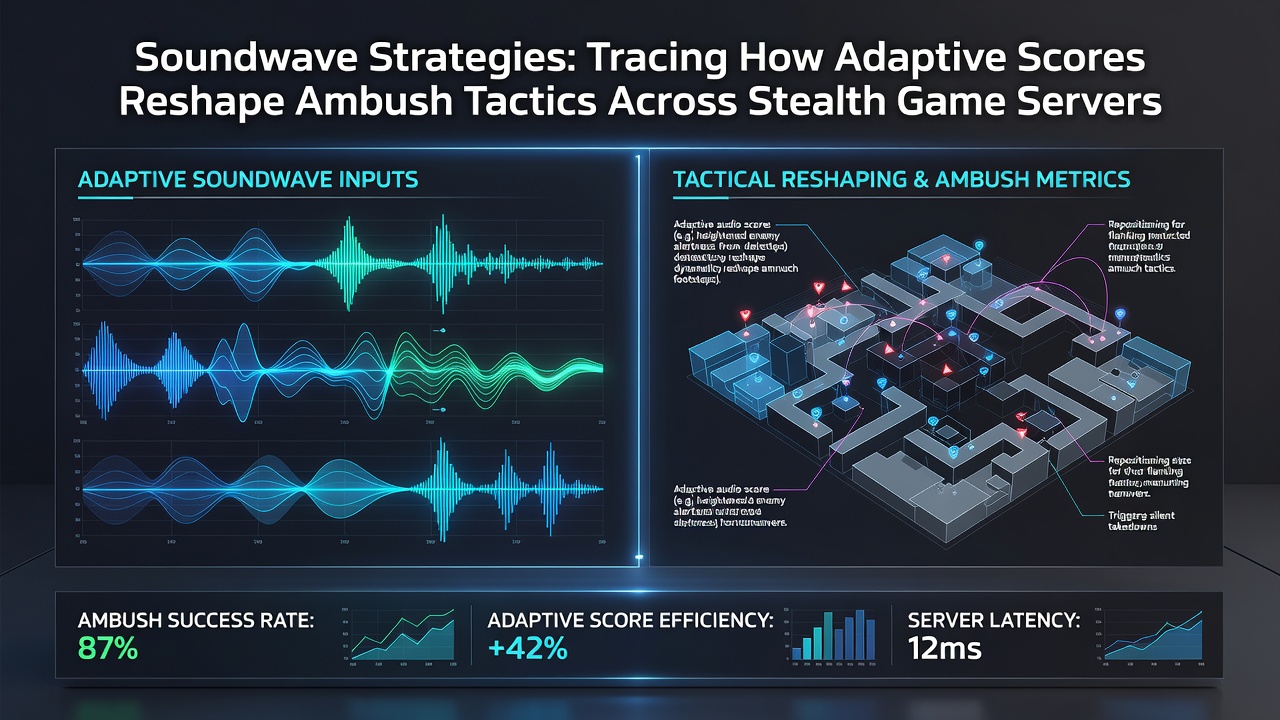
Server logs from major stealth titles show ambush completion rates rising when adaptive scores aligned with scripted patrol cycles, and this alignment occurred more frequently after balance patches rolled out in mid-2025. Players on North American clusters tended to favor rapid engagements during rising musical tension, whereas Asia-Pacific servers recorded higher success with delayed strikes during score lulls that masked footsteps. The Entertainment Software Association published aggregate figures indicating a 12 percent increase in coordinated multi-player takedowns on stealth-focused servers between 2024 and 2026, attributing part of the gain to improved audio feedback loops.
One documented case involved a European tournament bracket where squads adjusted their pre-ambush waits to match the length of low-intensity score segments, reducing detection by 18 percent according to post-match telemetry. These adjustments spread through forum discussions and replay analyses, prompting other regional groups to test similar timing strategies on their local servers.
Server Infrastructure and Audio Synchronization Challenges
Maintaining consistent adaptive score delivery across distributed servers requires precise timestamping and buffer management, and network engineers address these through dedicated audio priority queues that operate separately from player movement packets. When latency spikes occur, engines fall back to pre-rendered tension stems that maintain rhythmic continuity even if full stem switching lags behind. Data from academic papers at Australian universities highlights how these fallback mechanisms preserved tactical parity between high-ping and low-ping players during ambush sequences.
Patch histories reveal that September 2026 updates included server-side prediction models for audio triggers, reducing desync incidents that previously disrupted coordinated strikes. Teams monitoring these changes noted fewer instances of mismatched tension levels that once forced players to abandon planned ambushes mid-execution.
Community Tools and Data Analysis Practices
Third-party overlays now parse live score data alongside kill logs, allowing analysts to map which musical segments correlate with higher ambush yields on specific maps. These tools aggregate anonymized server statistics and display heat maps that highlight zones where players initiate contact during particular score phases. Industry reports from UK-based research organizations confirm that such visualizations helped regional teams refine their entry timings, leading to measurable improvements in survival rates during server-hosted events.
Replay archives maintained by player communities further illustrate how adaptive scores influenced route selection, with squads rerouting through quieter audio zones to mask their approach vectors. This practice spread after initial findings appeared in public data repositories during 2025, prompting broader adoption across multiple stealth titles.
Conclusion
Adaptive scoring continues to integrate more deeply with server architecture and player coordination systems, and ongoing patches refine how these audio elements interact with ambush variables. Regional differences in adoption patterns persist, yet shared data sets allow tactics to migrate between clusters as players review synchronized logs. Continued monitoring by academic and industry groups will track further shifts as audio engines evolve alongside network optimizations scheduled through late 2026.